 Sagalee Bilisummaa Oromoo
Commission ‘forced to quit’ Meki investigation into Bate’s assassination after gathering witness testimonies implicating security forces
Commission ‘forced to quit’ Meki investigation into Bate’s assassination after gathering witness testimonies implicating security forces – AS
A letter by the Ethiopian Human Rights Commission (EHRC) addressed to the Oromia regional state government, including President Shimelis Abdissa, revealed the Commission was “forced to quit,” its investigations in Meki city, East Showa Zone, Oromia Region, three days after its team of investigators began to gather witness testimonies from the scene that showed a trail of activities implicating government security forces in the assassination of Bate Urgessa, Political officer of the opposition Oromo Liberation Front (OLF).
EHRC’s letter, written on 17 April and seen by Addis Standard, is addressed to the Oromia regional state President’s office, the office of the regional police commission, the office of the regional attorney general, and the office of regional administration and security. The two-page letter confirmed that Bate was killed in Meki City, and stated that “as soon as the information was received”, on 10 April, EHRC deployed “investigative experts who were working nearby” to gather information and evidence.
Based on the information and evidence collected by its team, the Commission revealed that it “understood” that on 09 April, Bate left his bedroom key at Abhem Pension’s check-in, where he was staying, at approximately 5:00 PM local time stating that he would be back after dinner.
After Bate left the Pension, at approximately 5:30 PM on the same day, a vehicle pulled into the same Pension’s compound, and four security personnel “armed with weapons”, wearing security uniforms commonly called ‘Ranger’, and military “red bonnet” dismounted the vehicle with “two officials” who appeared to be accompanied by the security personnel. A total of six people rented bedrooms in the same Pension, the letter chronicles.
Unlike other days, around 5:45 PM on the same day, the security forces of the city started “preventing the movement of three-wheeled vehicles (Bajajs) and pedestrians.”
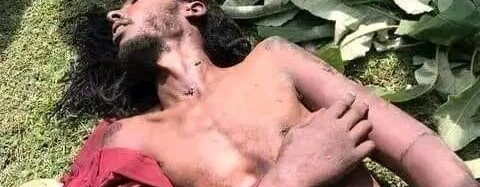
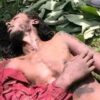
On the same night, at a location outside the city where Bate’s lifeless body was found, one camouflage-painted, double-cabin pick-up vehicle “sped and exited the main road” and stopped without turning off its lights at around 12: 00 midnight, according to EHRC’s accounts gathered from eyewitnesses. Four men wearing ‘Ranger’ uniforms, red bonnets, and armed with weapons got out of the vehicle, dragged one person from the back of the vehicle, shot the person repeatedly, and left, the letter revealed. On the morning of 10 April Bate’s body was found with his hand “tied behind his back, shot in the head, chest, and abdomen areas.”
EHRC’s team continued its investigation, and on 11 April tried to contact the same witnesses the team spoke to earlier to ask additional questions, but “learned that the witnesses have been arrested by the police.” The police said they had detained the witnesses “for their safety.” However, the Commission was barred from speaking to the witnesses.
EHRC’s letter further stated that although the Commission made “great efforts to ensure the safety of our witnesses” during the investigation process, the police did not only arrest the same witnesses whom the Commission’s investigators spoke to but when the Commission’s team moved around in the city of Meki to carry out the investigation, “unidentified people and vehicles followed the investigation experts and disrupted the movement…”. Furthermore, the police also detained Bate’s family members who were cooperating with EHRC’s investigation.
“Therefore, to ensure the safety of the investigative experts, witnesses, and people involved in the investigation, the Commission was “forced to quit” the evidence-gathering work it was doing in the city on 12 April.
EHRC’s letter requested the regional authorities to provide the necessary cooperation for its work as prescribed by law to ensure “no obstacle is created in its investigations.” It also requested to visit and meet immediately with detained witnesses who cooperated in providing information to the Commission, as well as appropriate follow-up to prevent human rights abuses on the families of the victim, and other suspects who are under police custody.
The Commission informed Oromia regional authorities CCd in the letter that it was “ready for consultations” with relevant officials to address the challenges within ten working days before it officially published the report on the findings of the investigation and its recommendations.
Asked by Addis Standard to comment on any progress since the letter was sent, EHRC declined and said it would “not comment on ongoing investigations,” which indicated that despite the setback, the Commission may proceed with publishing its preliminary findings on the circumstances surrounding the assassination of Bate.
Addis Standard was the first to report citing a family member who spoke on condition of anonymity that Bate was taken out of his hotel room around midnight by people who “looked like government security forces.”
However, a statement released on the same by by the Oromia regional government accused “some political entities” of trying to exploit the opportunity to make up for their “political losses” by making the government responsible for the killing, and threatening any reporting implicating anyone “for the killing until security forces investigate and announce it to the public.”
The OLF has condemned the “brutal murder” of Bate, describing him as “eloquent, selfless, and brave Oromo soul.” it also appealed to “all human rights organizations and peace-loving people to undertake an immediate neutral and impartial investigation.”
Several countries, including the US and the EU, issued similar calls calling for investigation into the killing.
Among the calls was a statement issued by U.S. Senator Ben Cardin, Chair of the Senate Foreign Relations Committee. “The killing of Bate Urgessa on Tuesday night was shocking and upsetting. I offer my deepest condolences to the family for their loss and urge Ethiopian authorities to allow a credible, neutral international body to conduct a thorough investigation into Bate’s death,” Senator Cardin said.
An outspoken politician, Bate Urgessa was released from prison on 100,000 birr bail after he was detained for two weeks accused of “conspiring with two armed groups, the OLA-Shene and the Fano militia, to incite unrest in the capital”. He was apprehended by security forces alongside French journalist Antoine Galindo while conducting an interview at the Skylight hotel in Addis Abeba on 22 February.
Previously, he spent years in and out of detentions on several occasions. During one of his latest imprisonments he had encountered a serious health issue while in police custody leading to his release.
Bate spoke of a harrowing experience during his detention in several informal detention centers in towns like Mojo, near his hometown, Awash Melkasa, Gelan, Sebeta and Burayu, all in Oromia region. AS







Leave a Comment
Your email address will not be published. Required fields are marked with *